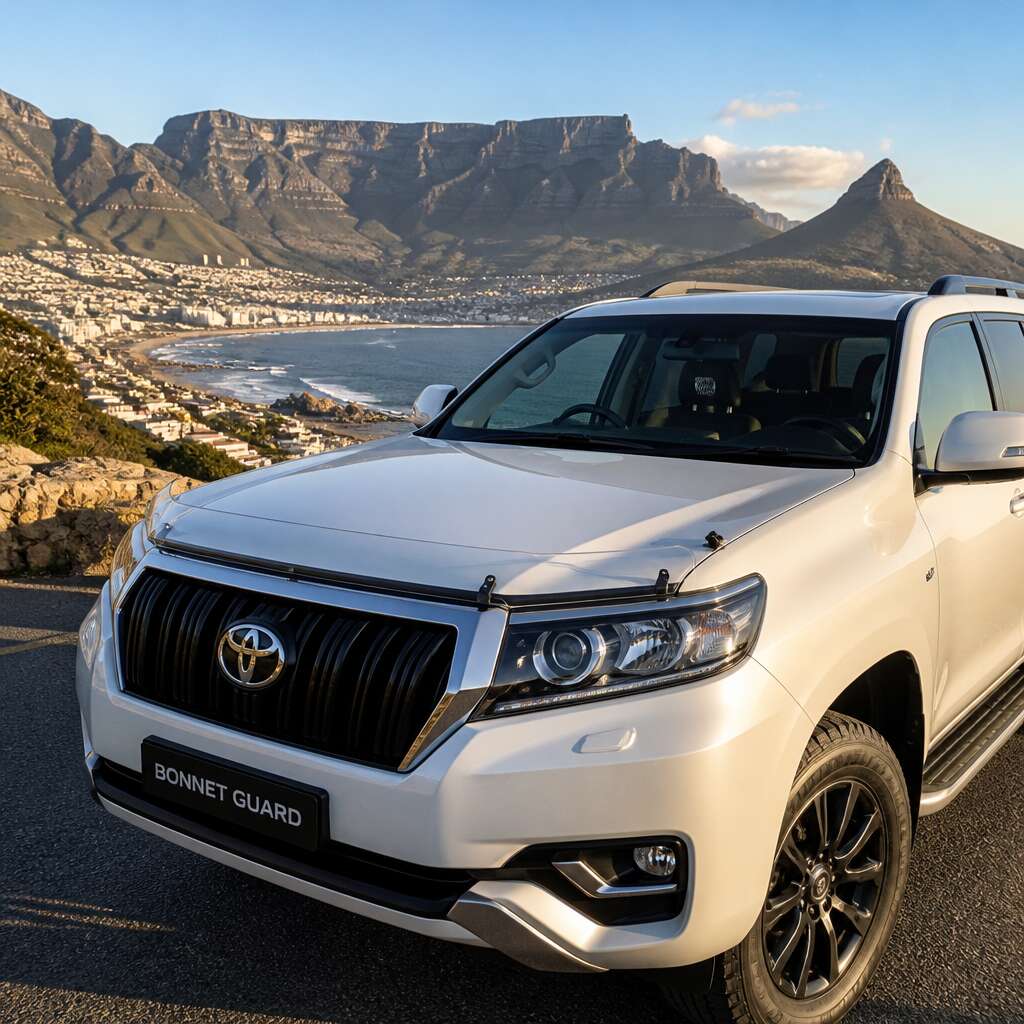
Understanding the Need for Bonnet Protection in Cape Town
Cape Town’s Unique Climate and Environmental Factors
Cape Town logs more than 3,000 sunshine hours per year, and that exposure accounts for only part of the damage. The southeasterly Cape Doctor wind routinely pushes past 100 kilometres per hour, hurling siliceous beach sand and granular road grit against vehicle fronts on coastal routes.
The fynbos biome adds another dimension. Pollen, resinous leaf litter and fine ash from seasonal wildfires settle on bonnets, and morning dew turns those deposits into mildly corrosive compounds. I have seen clear coat failure along leading edges within three years, and it is not covered by warranty! For anyone weighing bonnet guards Cape Town, this pairing of UV radiation and windborne abrasion is the practical reason to act.
The case for bonnet guards Cape Town holds across the city, whatever the dominant hazard. In a typical week, your front end encounters:
- Sea sand blown across the M3 near Muizenberg
- Stone chips from gravel trucks on Winelands passes
- Bird droppings and sap under urban plane trees
How Bonnet Guards Differ from Standard Car Covers
Repainting a single bonnet panel in Cape Town can set you back R4,000 or more, yet the protection most people buy, a full car cover, only functions while parked. That does nothing for the drive itself! I discovered this after a gravel truck near Franschhoek left my leading edge dotted with small chips and cracks.
Bonnet guards Cape Town solve a different problem. A car cover is a stationary canopy, fitted before leaving the car. A bonnet guard stays on the vehicle and works at speed, redirecting airflow so grit and small stones skip over the paintwork.
The practical differences:
- Covers protect a parked vehicle; bonnet guards protect a moving one.
- Covers wrap the full body; a guard targets the leading edge.
- Covers take minutes to fit; guards remain permanently in place.
For daily commuters, bonnet guards Cape Town match the actual risk profile of the road.
Key Features to Look for in a Quality Bonnet Guard
Material Durability Against UV and Salt Air
Salt air degrades ordinary plastics in less than a season. I have seen it happen. That is why material choice is the first battle. For bonnet guards Cape Town, the key is polycarbonate with built in UV inhibitors. This compound resists both solar radiation and sodium chloride.
Quality brackets use stainless steel or coated alloys. Cheap zinc bolts fail quickly. A good guard also has sealed edges to prevent moisture trapping. Look for these specifics:
- High density polycarbonate, not ABS
- UV protective layer blocking UVA and UVB
- Rubber gaskets that do not dry out
The material must withstand daily coastal exposure without becoming brittle. Testing for salt spray resistance is an industry standard, yet many products skip it. Choose a guard that admits to its test results!
Custom Fit for Different Vehicle Models
A bonnet guard that needs trimming with a utility knife is not custom fit. It is a compromise. When shopping for bonnet guards Cape Town, avoid universal kits. Many bonnet guards Cape Town sold online are not model specific. Mounting points must align with factory holes without drilling.
Quality guards integrate with the vehicle’s lines. They leave clearance for the bonnet release and do not restrict airflow. Ask whether the moulds came from original factory data or 3D scans.
Fitment essentials:
- Model specific brackets with vibration dampening
- Cutouts that clear washer jets and sensors
- Protection for paint around the mounting area
A guard that shifts at speed damages the paint it is meant to protect. Choose one engineered for your car, not adapted to it. This is the difference between protection and a persistent rattle.
Ease of Installation and Removal
Most quality bonnet guards Cape Town drivers choose fit in under ten minutes. The real test comes on the second removal, when you need to wash the car. A well designed system uses quick release fasteners or tool free levers. If fitting requires contorting your arm through the engine bay, the design has failed. Removal should take less time than filling the washer bottle.
Removal prevents trapped grit from grinding against the bonnet edge. Look for brackets with captive nuts and rubber grommets, not plastic clips that go brittle in cold weather. The hardware should feel solid at the mounting points.
- Tool free removal for regular washing and inspection
- Captive fasteners that cannot drop into the engine bay
- Finger accessible levers that work with cold hands
Security balances convenience. Quick release systems invite theft, so several premium bonnet guards Cape Town buyers prefer a lockable pin on one side. That small compromise separates a thoughtful design from a cheap afterthought.
Ventilation and Moisture Resistance
Trapped condensation under a bonnet guard can elevate humidity against the paintwork, leading to corrosion on electrical connectors and micro blistering. That is why many bonnet guards Cape Town drivers choose include breathable membranes and vent placements designed to equalise temperature and expel damp air.
Key features to inspect are:
- Breathable outer layers that resist rain while permitting air exchange
- Internal channels that direct condensation away from the bonnet edges
- Moisture-wicking fleece lining to prevent droplets from settling on the clear coat
A hydrophobic treatment on the outer shell adds protection against coastal dew. Some guards integrate grommeted vents near the windscreen wipers to release trapped heat. These details separate a functional cover from one that merely offers a snug fit.
Security and Anti-Theft Considerations
Vehicle theft rarely involves smashing a window. More often, thieves remove accessible components to reach the latch beneath. Many drivers seeking bonnet guards Cape Town overlook this, yet security should factor into the purchase. Shear-head bolts and recessed locking pins deter opportunistic criminals who might otherwise strip the guard in seconds.
Key security features to verify:
- Keyed fasteners that match your existing ignition key
- Reinforced mounting plates that resist prying
- Anti-tamper screws requiring specialised bits
A guard that mounts via exposed clips offers convenience, but it compromises protection. Weigh that trade-off carefully. The best designs use proprietary tools for removal, adding a layer of security without complicating daily use. For those buying bonnet guards Cape Town, this distinction between a cosmetic accessory and a theft deterrent is essential.
Top Installation and Maintenance Tips for Cape Town Drivers
Preparing Your Vehicle Before Installation
Before fitting bonnet guards Cape Town, the surface condition of your bonnet determines how well the guard seals and protects. Even a thin film of road grime can cause micro abrasion once wind presses the guard against the paint. Wash the bonnet with a pH neutral cleaner, then dry it fully. Pay attention to the edges where the guard mounts; old wax residue can prevent the adhesive strips from bonding correctly.
Follow these preparation steps:
- Inspect the paint for chips or cracks and treat them first
- Degrease the mounting area with isopropyl alcohol
- Warm the bonnet slightly if the ambient temperature is below 15°C
In my experience, a warm surface lets the tape cure faster and reduces the chance of lift. After installation, check the seal weekly during Cape Town’s windy months. Salt spray collects under the guard if you skip regular cleaning. For long term results with bonnet guards Cape Town, a quick wipe with a soft cloth after each coastal drive extends the fitment’s life.
Step-by-Step Guide to Fitting a Bonnet Guard
Fitting bonnet guards Cape Town car owners rely on is a matter of technique. After the surface prep, align the adhesive strip with the bonnet’s leading edge, then press from the centre outward. This pushes air bubbles to the sides, where they can escape. Work in small sections, using a microfiber cloth to apply even pressure. Once the guard sits flat, leave the bonnet untouched for at least six hours. Cape Town’s sea breeze can interfere with curing, so a garage or shaded area makes a difference.
Maintenance follows a similar logic. Sand and salt are the real enemies; a quick rinse with fresh water every few days keeps grit from working under the edges. When you do a deeper clean, lift the guard slightly and wipe the underside with a soft cloth. This prevents the adhesive from weakening. For drivers who park near the coast, a monthly inspection of the seal is worthwhile. If you notice any lifting, reapply pressure and clean the area first.
Cleaning and Storing Your Guard for Longevity
Salt residue hides in the creases, so a gentle rinse after every coastal drive keeps the bond intact. I have seen bonnet guards Cape Town drivers rely on fail within months simply because owners skipped this step. When the guard is not in use, store it flat, not rolled. Rolling creates permanent creases that compromise the fit.
- Wash with lukewarm water and a pH-neutral soap.
- Dry completely in the shade before folding.
- Keep it away from direct sunlight during off-season.
For bonnet guards Cape Town drivers store between winters, a clean, dry guard in a breathable bag outperforms any plastic wrap. That extra attention protects the material from UV brittleness and salt corrosion on the edges.
When to Replace Your Bonnet Guard
Most bonnet guards Cape Town drivers buy are designed to withstand years of coastal weather, but the mounting hardware often fails first. Check the rubber gaskets and brackets every few months! If the guard shifts when you press on it, the fixings are the issue, not the guard itself.
There comes a point where maintenance stops making sense. These are the signs I look for when assessing whether bonnet guards Cape Town drivers should call it quits:
- Stress fractures around the mounting holes, which signal material fatigue.
- Permanent discolouration that fails a polish test, indicating UV breakdown.
- A loose fit that persists after tightening, meaning the guard has warped.
A guard that has taken a stone strike or been caught in a gale-force south-easter should be inspected immediately. A deformed guard at speed can vibrate against the paintwork, which defeats its purpose. Replace it when the material no longer holds its shape, not when it merely looks tired.
Cost, Availability, and Local Buying Considerations
Price Range of Premium vs. Budget Options
Pricing for bonnet guards Cape Town motorists actually pay varies more than you might expect. Budget options start around R450, while premium brands with UV-stabilised polymers can exceed R1,200. The gap reflects warranty terms, fitment precision, and resistance to the coastal salt haze we covered earlier.
Local availability is strong. Specialist 4×4 outfitters in Milnerton and Brackenfell stock most popular models. For older or imported vehicles, expect a three to five day lead time from suppliers in Johannesburg.
Before you buy, consider:
- Postage costs, which often offset any online discount
- Whether the supplier offers on-site fitment for your specific make
- After-sales support for replacement clips and rubber edging
Purchasing from a local fitment centre rather than an overseas marketplace usually makes sense. Suppliers who stock bonnet guards Cape Town drivers actually need will have the right mounting hardware and a shorter warranty path.
Where to Buy Bonnet Guards in Cape Town
Physical inspection matters when buying accessories. A guard that looks right online can fit poorly in person. Cape Town has reputable fitment centres around Milnerton and Brackenfell where you can check alignment before paying.
Specialist retailers maintain live stock systems. Smaller operators offer keener pricing but carry fewer SKUs. The difference shows in mounting hardware quality.
Consider delivery timing if you need the guard before a road trip. Courier fees from Johannesburg add R150 to R350. Imports can take two weeks. Bonnet guards Cape Town outlets stock will arrive the same day.
Useful checks before purchase:
- Confirm the guard matches the vehicle’s year model
- Ask whether the warranty covers UV discolouration
- Inspect the rubber edging for consistent thickness
Bonnet guards Cape Town drivers purchase locally include better after-sales support. Replacement edging and clips are shelved nearby. Importing saves money only if you discount the risk of mismatched brackets.
Professional Installation Services vs. DIY
Costs vary more than the sticker price suggests. A set of bonnet guards Cape Town motorists buy locally often includes hidden savings. Delivery from Gauteng adds a courier fee, and imports risk duty charges. Local stock means no waiting.
Installation splits opinions. Professional fitment centres charge around R250 to R450. They align each guard, check the rubber edging, and tension the brackets correctly. DIY saves that fee but demands patience. A misaligned guard can flap at speed.
- Warranty validity if you fit it yourself
- Time spent versus workshop turnaround
- Replacement clips availability
For most drivers, the professional route pays off. However, bonnet guards Cape Town retailers sell come with clear instructions, so experienced owners can manage DIY confidently.
Warranty and After-Sales Support
Local pricing tells a fuller story than online comparison tables. When you buy bonnet guards Cape Town retailers stock, the quoted figure usually includes backup that distant e-commerce listings cannot offer. A warranty matters here, especially after coastal exposure thins cheaper paint protection films. Consider what happens if a bracket cracks at month three.
Most reputable suppliers handle that claim directly. You return the guard, they swap it, no courier to Johannesburg! That responsiveness changes the total cost of ownership.
After-sales support often covers:
- Replacement clips and rubber edging
- Refit guidance for different bonnet contours
- Straightforward warranty claims
Availability favours local purchase as well. Salt air accelerates wear on certain fittings, so having a shop nearby that stocks spares prevents downtime. Online marketplaces may undercut on price, but freight fees erode that advantage quickly. For local buyers, the route balances cost with genuine accountability.
Frequently Asked Questions About Bonnet Protection in the Cape Region
Will a Bonnet Guard Scratch My Paintwork?
Most owners worry about abrasion before they worry about UV rays. I understand that fear. The truth is, a correctly fitted bonnet guard sits on a protective layer, not directly on your paintwork. High quality kits include a clear film or rubber edging that creates a buffer between the guard and your bonnet.
Dirt trapped underneath is the real enemy. Salt air and road grit in Cape Town can settle between those surfaces. That is why regular cleaning matters! You can also check the fitment after every car wash.
Peace of mind comes down to a few details:
- Edge protectors on the guard itself.
- A custom fit model rather than a universal one.
- Monthly removal and cleaning of the contact points.
With this approach, bonnet guards Cape Town drivers rely on should never touch bare paint.
Can I Use a Bonnet Guard During Rainy Season?
Rainy season in the Cape is not a reason to shelve your guard. The real question is whether the guard can handle persistent dampness. Yes, it can, if you choose a model with breathable backing and sealed edges. Those features allow trapped moisture to evaporate instead of pooling against your bonnet.
Consider what happens after a week of constant drizzle. Without airflow, condensation forms between the guard and the paint. The result is dulling, not from rain itself, but from prolonged contact with water. That is why the best bonnet guards Cape Town drivers use include vented panels or hydrophobic layers that push water away.
Check your specific setup during heavier downpours:
- Lift the guard edge after a storm to see if droplets are beading or sticking.
- Ensure the drainage slots are not blocked by leaves or grime.
- Give the guard a quick shake before removal to shed excess water.
Used correctly, a bonnet guard handles Cape Town’s wet months without issue. The key is matching the guard to your climate, not just your vehicle model.
Are Bonnet Guards Legal on South African Roads?
Are bonnet guards Cape Town drivers fit actually road legal? Yes, they are! South African traffic law does not prohibit them outright. The National Road Traffic Act concerns itself with modifications that compromise roadworthiness. A guard fixed firmly and positioned clear of the driver’s line of sight passes without issue.
The catch is installation quality. A guard that rattles loose or interferes with the bonnet latch becomes hazardous during police inspection. Confirm mounting brackets carry SABS approval before purchase. Insurance introduces another layer. Declare the aftermarket part to your provider. Undeclared additions can void a claim, even when the law allows them.
Your receipt and fitment documents prove compliance if questions arise.
How Long Does a Bonnet Guard Typically Last?
A well fitted bonnet guard should serve between three and five years in Cape Town. That estimate assumes decent material quality and regular care. Local conditions degrade cheap plastics quickly. Salt laden air and strong UV exposure accelerate wear in ways owners inland rarely see. Bonnet guards Cape Town motorists buy from reputable automotive shops tend to outlast unknown imports by a considerable margin.
Consider how your guard ages. A polycarbonate unit may develop a chalky residue after two years. Acrylic versions often yellow sooner when parked facing the afternoon sun for long periods. The mounting brackets typically fail before the shield itself does. Rust on the hardware or hairline cracks near the screw holes signal the guard is nearing its end.
Some Cape drivers report seven years of service from top tier brands. Budget fittings sometimes struggle to reach eighteen months. Your parking situation matters as much as the product’s price.



0 Comments