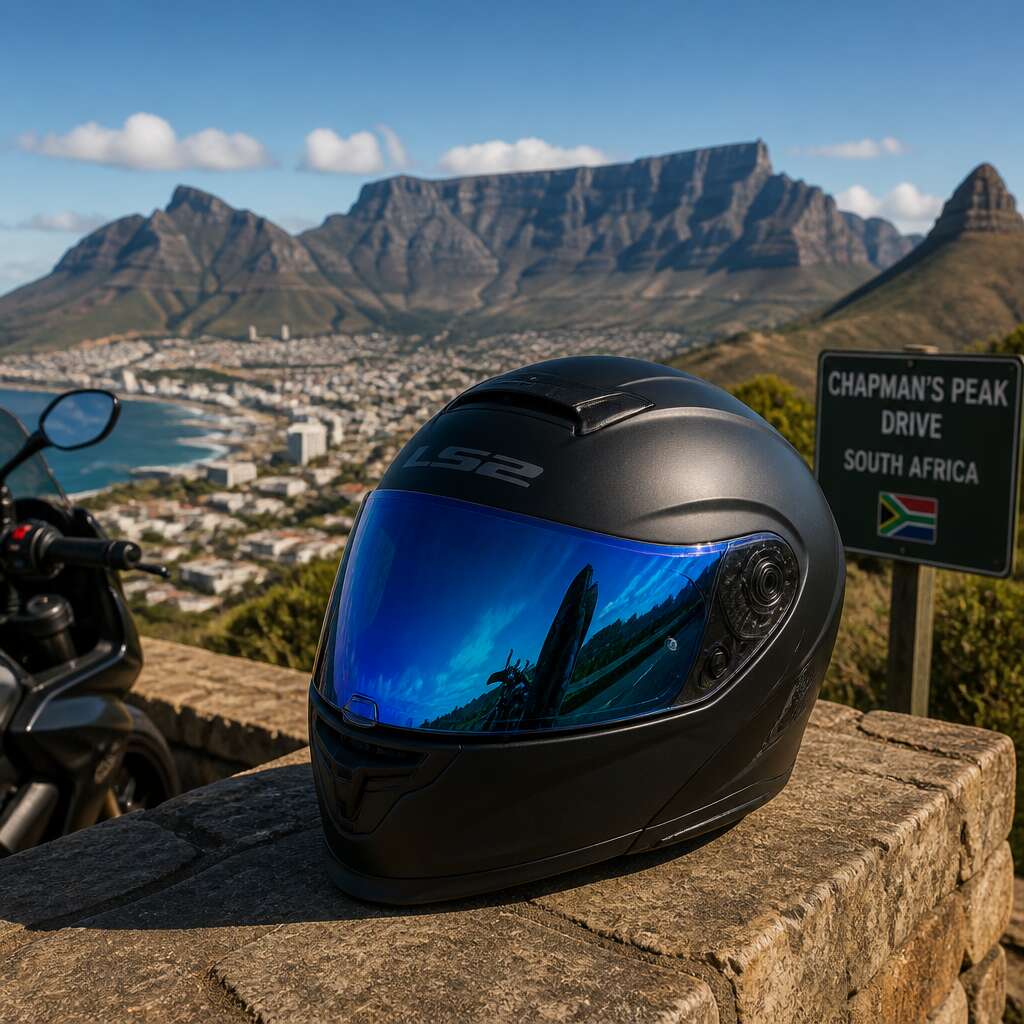
The Appeal of Iridium Visor Technology
What Makes an Iridium Visor Different
Iridium visors earn their name from the metallic coating that shifts in appearance depending on the light. Unlike tinted visors that simply darken the world, iridium reflects a portion of the spectrum while transmitting the rest. The result is a cooler, more balanced field of view, which reduces strain on your eyes over long rides.
This becomes especially relevant when you consider blue iridium helmet visors South Africa. The coating is engineered to manage intense glare without muting essential contrast on the road. Riders often notice that the visor holds its colour fidelity even under harsh sun.
A few technical points stand out:
– The reflective layer blocks a large share of infrared radiation before it reaches your face.
– The blue tint sits in the middle of the spectrum, which assists depth perception.
– The coating is applied to the outer surface, not embedded, so the polycarbonate retains its impact performance.
That balance between clarity and protection is what separates iridium from standard dark visors.
Colour Shifts and Aesthetic Appeal
Ask any rider with a mirrored visor and they will tell you the same thing. A helmet is never the same colour twice! That is the core appeal of blue iridium helmet visors South Africa. The coating produces a shifting palette between pale azure and deep slate, depending on the angle of the light. Parked in shade it reads cool. Under full sun it turns vivid and sharp.
That dynamic quality separates iridium from a plain smoked visor. The blue tint also sharpens the boundary between visor and shell, which helps angular designs look more deliberate. Owners describe the effect in similar ways:
- Light reflections trace the curve of the visor during turns.
- The blue tone pairs well with white, black, and metallic grey shells.
- Surrounding colours appear in the coating at certain angles, giving a sense of depth.
None of this is accidental. The finish is designed to be noticed, and the same physics that make blue iridium helmet visors South Africa stand out also shape how the helmet looks in motion.
Glare Reduction and Contrast Enhancement
A single flash of low sun can erase a junction from view. That is the practical case for blue iridium helmet visors South Africa. The metallic coating reflects a portion of incoming light before it reaches the polycarbonate base, cutting the harsh bloom that leaves riders squinting. The result is a calmer visual field where texture and contour remain readable.
Contrast improves because the blue filter suppresses the yellow-green wavelengths that scatter in haze. Road markings and brake lights hold their definition at distance. I notice the effect most on overcast days, when flat light flattens everything else.
For those weighing a purchase, the benefits are straightforward:
- reduced eye fatigue over long rides
- better definition of wet tarmac and kerbs
- consistent tint across the lens, unlike gradient films
The same coating that delivers this clarity also handles the shift from tunnel to sunlight without the usual white-out.
Heat and Scratch Resistance Properties
The metallic layers on blue iridium helmet visors South Africa riders choose are not purely cosmetic. They serve as a thermal barrier. On a scorching summer ride, the visor surface absorbs significant infrared energy. The coating reflects much of that heat before it reaches your face. I have sat through long traffic lights with the visor down, and the difference is tangible!
Scratch resistance is another advantage of the manufacturing process. The iridium layer is deposited under vacuum, creating a dense, hard surface. This does not make the visor indestructible. It does reduce the fine swirl marks that appear after repeated wiping with a dusty glove. For riders weighing blue iridium helmet visors South Africa suppliers sell, the coating’s resilience is a quiet selling point.
A few properties worth remembering:
– Heat rejection reduces facial fatigue in direct sun
– Vacuum deposited layers resist micro scratches better than tinted films
Microfiber cloths and gentle pressure keep the coating intact for years.
South African Road and Weather Challenges
Intense UV Exposure and Long Daylight Hours
There’s a reason seasoned touring riders check the sun schedule before crossing the Vaal River. At altitude, South Africa’s UV index can hit 11, a level rarely seen in the UK, and that kind of exposure warms your neck and degrades peripheral vision when light bounces off wet tar and white road markings.
The days are genuinely long as well! In peak summer, riders get 14 hours of daylight, much of it low-angled and piercing. That means:
- Morning sun directly into eastbound eyes during the 05:00 commute
- Harsh noon glare with no cloud cover to soften it
- Stubborn evening light that stays damaging until after 19:00
I’ve watched riders squint through scratched visors after a few hundred kilometres on the N1. That is exactly why blue iridium helmet visors South Africa are the smart choice for riders who face this daily test of concentration.
Dust, Wind, and Sudden Rain Showers
The Cape Doctor wind hits 70 km/h without warning, shoving your helmet sideways mid-corner while the Karoo’s red dust hangs in the air after a truck passes. Then the Highveld afternoon delivers its daily thunderstorm, flooding roads within minutes! Riding here means facing all three in one tank of fuel.
Riders on the N1 or the R59 face a rotating set of hazards:
- Dust clouds from bakkies that reduce visibility instantly
- Crosswinds that push you into the next lane
- Rain showers that arrive dry and leave the road wet in fifteen minutes
Each one taxes your attention. A visor that smudges or holds water makes that tax heavier. Riders fit blue iridium helmet visors South Africa for this reason. The hydrophobic layer sheds rain quickly, and the smooth face releases dust without repeated wiping. When comparing blue iridium helmet visors South Africa to standard shields, the practical details stand out most.
Highways vs. Off-Road: Visibility Needs
Riding the N1 at 120 km/h demands a different visual focus than picking a line through rocky jeep tracks. Highways punish hesitation. Off-road punishes tunnel vision. The two environments ask different things from your visor:
- Highway visibility: long-distance clarity for brake lights, signage, and lane changes
- Off-road visibility: peripheral awareness for branches, ruts, and loose stone
Blue iridium helmet visors South Africa riders choose must handle both without distortion. On tar, your eyes lock onto the bakkie ahead at speed. In the bush, they dart between obstacles at 40 km/h. On the N1, you need to see the car three seconds ahead. In the bush, you need to see the rock three metres ahead. Both demand a visor that stays true to your line of sight!
Seasonal Changes in Light Conditions
South Africa’s seasonal light shifts are more pronounced than many riders expect. Summer’s sun hangs high, flooding the tar with overhead brilliance. Winter drops the sun low, raking across the horizon into your line of sight. The eye adapts slowly. Your visor must adapt instantly.
Blue iridium helmet visors South Africa riders choose are engineered for this seasonal volatility. The mirror coating neutralises the high summer sun while taming low winter glare off wet asphalt or dusty gravel.
- Summer: overhead sun at noon, harsh brilliance on open roads
- Winter: low-angle sun, direct glare during peak commute hours
- Spring and autumn: rapidly shifting cloud cover, intermittent brightness
The change between seasons is rarely gentle. One week you ride in clear light, the next you face a low autumn sun sitting in your peripheral vision. A visor that performs in only one light regime leaves you vulnerable when the season turns.
How Tinted Visors Help with Perceived Temperature
The tar surface on a northern South Africa highway can approach 70 degrees Celsius in January. That heat radiates upward while your eyes fight the sun’s glare. Your body reads the combined stress as higher temperature, and fatigue sets in before you have burned real energy.
Blue iridium helmet visors South Africa are a direct response to this dual burden. They filter out a portion of the visible spectrum before it strikes your eye, so your pupils stay relaxed. Less squinting lowers your heart rate, and your face cools when your eyes stop working against the glare.
The measurable difference:
- Lower pulse variability during long open stretches
- Reduced headache pressure after heat-soaked urban traffic
- Fewer rest breaks needed on a 200 km ride
Your head stays cooler without opening a single vent.
Legal Requirements for Motorcycle Visors in South Africa
Understanding SABS and ECE Standards
In South Africa, the National Regulator for Compulsory Specifications requires all helmet visors to meet SABS standards. ECE 22.05 certification serves as a benchmark for impact and optical clarity. For blue iridium helmet visors South Africa, the critical factor is light transmission percentage, not color.
Under SABS regulations, visors must transmit at least 50% of visible light during daylight hours. ECE standards go further, requiring 80% for clear visors and 50% for tinted ones. I always check the label before buying. Typical compliance requirements include:
- Visible marking of the standards number
- Optical class rating of 1 or 2
- No distortion or prismatic effects
Blue iridium coatings often reduce transmission below legal limits, so a rider must verify compliance. For blue iridium helmet visors South Africa, this step is non-negotiable. In practice, South African traffic officers rarely test visors, but a crash could expose the issue in insurance claims.
Night Riding Restrictions on Tinted Visors
One word separates a lawful blue iridium visor from a fine at night: transmission. The National Road Traffic Act obliges every rider to keep an unobstructed view after dark. Blue iridium helmet visors South Africa typically transmit 30% to 40% of visible light, and the best ones touch 50%, which is a daylight minimum, not a night-time figure.
I have watched riders lose this argument at a roadblock near Pretoria. Metro police run dusk checks and know exactly what a tinted shield looks like. The night-time options are limited:
- Swap to a clear visor before sunset.
- Ride a modular helmet with the internal sun shade retracted.
- Carry a spare visor and change at a petrol station.
Treat blue iridium helmet visors South Africa as daylight-only equipment. The law leaves little room for interpretation after sunset.
Permitted Visible Light Transmission Levels
The photometer does not negotiate! I have watched riders assume their visor’s stamped rating protects them, until the device tells a different story.
Legal requirements for motorcycle visors in South Africa centre on a minimum visible light transmission of 35%. Blue iridium helmet visors South Africa typically register between 30% and 50%, placing the darker shades below the legal minimum. The National Road Traffic Act sets the baseline.
The testing protocol places a light meter flush against the visor. Officers rely on their own measurement, not the stamp. Consider what they check during a stop:
- The photometer reading of the shield in its current position
- The ECE certification mark moulded into the visor edge
- The rider’s documentation for the visor model
The gap between certified and actual transmission causes most failures. Coatings fade under heat, and blue iridium helmet visors South Africa see plenty of that heat on summer rides.
Where to Find Quality Visors Locally
Leading Motorcycle Retailers in Johannesburg and Cape Town
The highveld sun around Johannesburg and the marine layer over Cape Town demand different things from a helmet visor. Both cities now carry blue iridium helmet visors South Africa, but the challenge is locating a retailer who understands the nuance. Joburg stores near Fourways and Randburg keep several options in stock, and their staff can explain how the coating behaves under harsh midday sun. Cape Town riders should head toward Montague Gardens or the Southern Suburbs. Those outlets usually hold smaller batches, so calling ahead saves time.
A solid retailer will also handle fitment correctly:
- Check that the visor seals flush against the helmet’s gasket.
- Confirm the base model matches the visor’s locking mechanism.
- Ask about the return policy if the tint feels too dark.
That last step is the one I always watch for, because the perception of blue iridium helmet visors South Africa varies with your typical ride time.
Online Marketplaces with Local Warehouses
Waiting three weeks for a visor delivery makes little sense when local warehouses stock the same item. Online marketplaces with South African distribution centres offer a faster route. I have ordered blue iridium helmet visors South Africa through these platforms and received them within two days, no customs forms or courier handoffs required.
Stock transparency is the real benefit. A marketplace tied to a local warehouse shows live availability, so you are not chasing a listing that ships from overseas. The return process also stays efficient: send it back to a local address if the tint does not suit your helmet model.
Ordering through these platforms also lets you cross-check prices against physical retailers. That comparison matters when coating quality varies between batches.
Specialist Helmet Stores and Custom Fitters
Specialist helmet stores and custom fitters offer something that online listings cannot: the chance to test the visor against your actual helmet shell before committing. A blue iridium helmet visors South Africa purchase through a specialist often includes a fitting session, which matters because aftermarket visors can vary in curvature between brands.
Custom fitters can also adjust pinlock posts or trim excess plastic for a snug seal. Some stores keep a range of blue iridium helmet visors South Africa behind the counter, not on display, so ask directly. I have found that requesting the stockroom often reveals better options than the front rack.
Here is what to look for in a specialist:
- A fitter who checks the visor base plate alignment
- Stores that stock genuine OEM parts alongside aftermarket options
- A willingness to swap out a visor if the tint does not match your helmet model
That hands-on approach justifies the drive to a specialist, especially when you are chasing a precise fit for track days or long commutes.
Comparing Prices Across Provinces
Pricing for blue iridium helmet visors South Africa varies more than most riders expect. A premium brand visor in Gauteng might cost 30% more than the same unit in KwaZulu-Natal, yet stock levels often dictate the real premium. Provincial distributors set their own margins, and smaller towns carry less inventory, so comparison across regions can yield genuine savings.
Local motorcycle accessory shops in Durban and Port Elizabeth frequently price match online retailers when asked directly. I have found that calling ahead saves fuel money and disappointment. Prices quoted over the phone can shift by the time you arrive!
Consider these variables when comparing:
- Shipping fees from Cape Town suppliers to inland provinces
- Warranty coverage differences between chain stores and independents
- Stock availability for specific helmet brand fits
The Western Cape tends to hold the widest selection due to import volumes through the port, which often lowers prices near the docks.
Warranty and Return Policies for Visors
Finding a trustworthy local source for blue iridium helmet visors South Africa often comes down to asking the right questions. Independent shops in smaller centres frequently carry fewer units, but they tend to offer hands-on fitting advice that online stores cannot match. I have seen warranty terms that vary wildly between suppliers, so clarify the return period before you hand over cash.
Check whether the warranty covers optical defects, coating peeling, or accidental scratches. Some retailers require you to keep the original packaging and receipt, while others accept a simple photo of the defect. For blue iridium helmet visors South Africa, the return policy matters most when the tint level feels different under real sunlight.
- Ask about the manufacturer’s warranty period
- Confirm if shipping costs for replacements are covered
- Request a written copy of the returns policy
Local shops in the northern suburbs of Pretoria often stock visors from the same import batch, but their return conditions still differ. A quick phone check saves you from a long drive to find that the item is final sale.
Brands That Offer Blue Iridium Options in SA
Tracking down blue iridium helmet visors South Africa often starts with knowing which brands ship actual factory coated options. LS2 and HJC offer them straight from production lines, while Shark and AGV rely on aftermarket suppliers. Nexx and Suomy occasionally appear through independent importers, but their stock levels shift without warning.
Inspect the tint under bright lighting before fitting. A genuine iridium layer shows even colour across the shield, with no cloudy patches near the edges. I have seen cheaper copies fail this simple test entirely.
- Ask if the brand makes a native blue iridium model, not a universal cut
- Check for SABS approval marks printed on the visor tab
- Confirm whether the visor includes a pre-cut tear-off film
Distributors like Mototek and J&I Motorcycles keep a rotating selection of blue iridium helmet visors South Africa. Their availability changes with seasonal imports, so a quick phone call saves you from a wasted journey.
Maintenance and Performance Tips
Cleaning Without Damaging the Reflective Coating
The reflective coating on blue iridium helmet visors South Africa riders depend on is more delicate than it appears. Everyday dust, bug splatter, and road film accumulate fast, but aggressive wiping causes micro-scratches that distort vision and dull the mirror finish. You cannot reverse that damage once it starts.
Start by rinsing the visor with lukewarm water to dislodge embedded grit. Add one drop of mild dish soap to a clean microfiber cloth, then work in slow, overlapping circles. Ammonia-based glass cleaners dissolve the reflective layer, so keep them far away from your helmet.
- Use a fresh microfiber cloth each time
- Never wipe a dry visor
- Pat dry with a separate lint-free cloth
A silicone-free spray protector applied weekly creates a barrier that prevents water, dust, and bugs bonding to the surface. This simple routine keeps blue iridium helmet visors South Africa weather conditions demand performing at their best. The difference in clarity is noticeable immediately!
Storing Your Visor to Prevent Scratches
Helmet bags collect more than dust. Keys, loose change, and earplugs sit against the visor and press micro-indentations into the reflective layer. I have watched riders rest helmets on handlebars, only to find the blue iridium finish clouded after a single weekend. Storage matters as much as cleaning.
- Place the helmet on a soft, rounded surface, never flat on the visor
- Keep it inside a padded helmet bag when travelling
- Leave it away from radiators, windowsills, and direct sunlight
Heat cycles make the plastic base flex microscopically, fatiguing the coating from underneath. A cool, dark, stable shelf is best. Riders using top boxes across South Africa can wrap the visor in a clean cotton cloth first. That simple layer protects your blue iridium helmet visors South Africa investment between rides.
When to Replace a Worn or Faded Visor
The first sign of a worn visor is rarely visible in direct sun. At dusk, point light sources smear into halos, and that distortion means the reflective layers are scattering light instead of filtering it! I have pulled over to clean my visor, only to realise the haze was inside the coating itself.
Replacement timing comes down to optical performance, not age. If water no longer beads on blue iridium helmet visors South Africa, the hydrophobic layer has eroded. That leaves the tint exposed to grit and UV, accelerating the fade cycle. The difference between serviceable and failing blue iridium helmet visors South Africa can be judged with three quick checks.
- Night-time starburst effects around oncoming headlights indicate scattering.
- A tacky feel along the upper edge signals coating breakdown.
- Tilting the visor under a direct lamp reveals microscratches that daylight misses.
Maximising Durability in Extreme Sun
Extreme South African sun does not attack a visor evenly. It concentrates on the upper curve and the area just above the hinge, where heat pools during midday stops. I have seen blue iridium helmet visors South Africa develop microcrazing along those zones within two summers, while the centre remains flawless.
The trick is to manage thermal load before it manages you. Park with the visor facing away from the sun when you dismount. Use a breathable helmet bag rather than a sealed one, because trapped heat accelerates adhesive breakdown. For riders who rely on blue iridium helmet visors South Africa, this habit is the difference between two seasons of clarity and five.
- Wipe perspiration from the seal area before it dries into salts
- Carry a spare visor in a soft pouch for midday swaps
These routines keep the reflective substrate cooler and drier than the ambient environment demands.

0 Comments